BACK
"Neon Genesis Evangelion"
Episode #23': Namida (Tears)
Scene: "SABISHII"
Phase One (Romaji)
|
Screen Cap
|
Cut No.
|
Description
|
Dialogue
|
|
|
119
|
Gamen kokumi
|
REI (OFF) "Dare?"
|
|
|
120
|
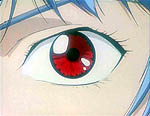
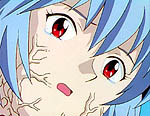
REI no me no UP
|
REI "Watashi"
|
|
|
121
|
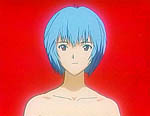
PURAGU nai no REI
|
REI "EVA no naka
no watashi"
|
|
|
122
|
Akai yoku wakaranai
mono INSÂTO
|
|
|
|
123
|
PURAGU nai no REI
|
REI "Ie, watashi igai
no dareka o kanjiru"
|
|
|
124
|
REI no e INSÂTO
|
|
|
|
125
|
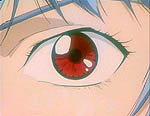
Me no UP
|
REI "Anata dare?"
|
|
|
126
|
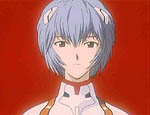
REI no UP
|
REI "Shito? Watashitachi
ga shito to yonde iru HITO?"
|
|
|
127
|
Utsumuite kao no mienai
REI ga mizu no naka ni tatte iru
|
REI no koe "——
Watashi to hitotsu ni naranai?"
|
|
|
128
|
Taiji suru 2[fu]tari
no REI
Mou hitori no REI wa GIRIGIRI de suimen no ue ni
uite iru
|
REI "Iie. Watashi
wa watashi. Anata ja nai wa"
REI no koe "Sou. Demo, dame. Mou osoi wa"
|
|
|
129
|
Kafukubu kara shito
ni shinshoku sarete iku IMÊJI (PURAGU SÛTSU no shita
o) daga, hyoujou no kawaranu REI
|
SE <<ZUBU-ZUBU-ZUBU>>
|
|
|
130
|
Mizu no naka
ni tatte iru REI
Utsumuite iru
|
REI no koe "Watashi
no kokoro o anata ni mo wakete ageru.
Kono kimochi, anata ni mo wakete ageru"
|
|
|
131
|
Taete REI
|
SE <<ZUBUBU>>
|
|
|
132
|
Mizu no naka
no REI kao agete serifu
Ureshisou na hyoujou de
|
REI no koe "——
Itai desho. Hora, kokoro ga itai desho"
|
|
|
133
|
Reisei ni kangaeru
REI
|
REI "ITAI? Ie chigau
wa.
......SABISHII?"
|
|
|
134
|
Kondo wa otagai
ni kao o mite iru
|
REI "Sou, sabishii
no ne"
REi no koe "SABISHII? Wakaranai wa"
REI "Hitori ga IYA nan desho"
REI "Watashitachi wa takusan iru noni, hitori de iru
no ga IYA nan desho"
|
|
|
135
|
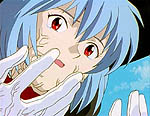
REI hanmen UP
|
REI "Sore o sabishii,
to iu no"
|
|
|
136
|
Mou hitori no REI,
egao de
|
REI no koe "Sore
wa anata no kokoro yo"
|
|
|
137
|
Waratta kuchimoto
|
REI no koe "Kanashimi
ni michimichite iru, anata jishin no kokoro
yo"
|
|
|
138
|
Suimen ni ochiru
suiteki
|
|
|
|
139
|
HA~ to kizuku REI
|
REI "!!"
|
|
|
140
|
PURAGU SÛTSU no HIZA
HATAHATA to ochiru mizu
|
SE <<PATAPATA>>
REI (OFF) "Kore ga namida?"
|
|
|
141
|
Kyougaku suru REI
|
REI "Naite iru
no wa watashi?"
|
Phase Two (English Translation)
|
Screen Cap
|
Cut No.
|
Description
|
Dialogue
|
|
|
119
|
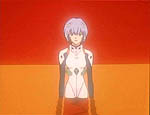
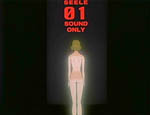
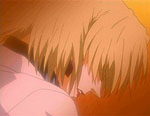
Black screen
|
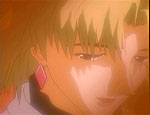
Rei (OFF) "Who is it?"
|
|
|
120
|
Rei eye UP
|
Rei "Me."
|
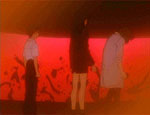
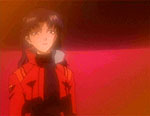
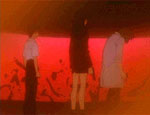
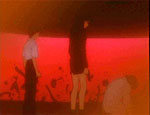
|
|
121
|
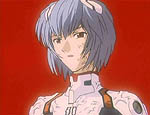
Rei inside the plug
|
Rei "The me inside the
Eva."
|
|
|
122
|
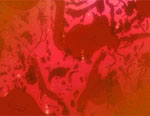
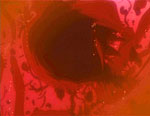
Insert of rather incomprehensible
red things
|
|
|
|
123
|
Rei inside the plug
|
Rei "No, I sense someone
other than myself."
|
|
|
124
|
Insert of Rei pictures
|
|
|
|
125
|
Eye UP
|
Rei "Who are you?"
|
|
|
126
|
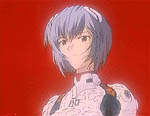
Rei UP
|
Rei "An angel? The person
that we call an angel?"
|
|
|
127
|
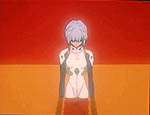
A Rei standing in the water,
looking down, her face hidden
|
Rei Voice "——
Don't you want to become one with me?"
|
|
|
128
|
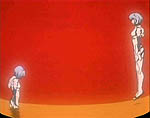
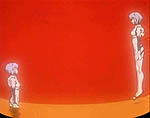
Two Reis confronting one another
The other Rei is just barely floating above the water's surface
|
Rei "No. I am I. I am
not you."
Rei Voice "I see. But it's no use. It's already too late."
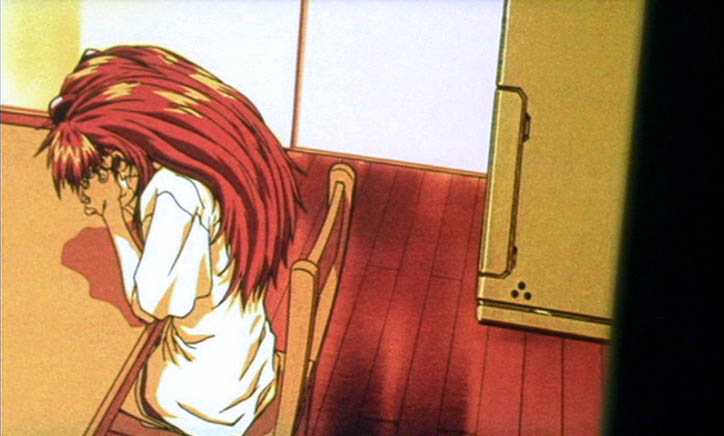
|
|
|
129
|
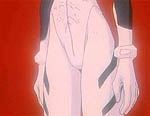
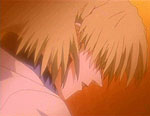
Image of Rei being invaded
by the angel from her abdomen (beneath the plug suit), but her expression
does not change
|
SE <<ZUBU-ZUBU-ZUBU>>
|
|
|
130
|
A Rei standing in the water, her head hanging
|
Rei Voice "Let me share
my heart with you. Let me share this feeling with you."
|
|
|
131
|
Rei hanging in
|
SE <<ZUBUBU>>
|
|
|
132
|
The Rei in the water lifts
her face when she speaks
She has a gleeful expression
|
Rei Voice "——
Doesn't it hurt? See, doesn't your heart hurt?"
|
|
|
133
|
Rei considers this calmly
|
Rei "Hurt? No, something
else.
......loneliness?"
|
|
|
134
|
This time they are looking
face-to-face
|
Rei "Yes, I'm lonely, aren't
I?"
Rei Voice "Lonely? I don't understand."
Rei "You hate being alone, don't you?"
Rei "We are many, but you hate being alone, don't you?"
|
|
|
135
|
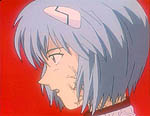
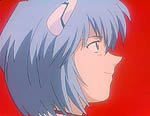
Rei side profile UP
|
Rei "That's what we call
'loneliness'"
|
|
|
136
|
The other Rei, smiling
|
Rei Voice "That is your
heart."
|
|
|
137
|
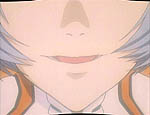
Laughing mouth
|
Rei Voice "Your own heart,
overflowing with sorrow."
|
|
|
138
|
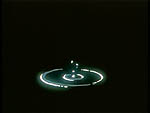
A droplet falls to the water's
surface
|
|
|
|
139
|
Gasping, Rei becomes aware
|
Rei "!!"
|
|
|
140
|
Knees of the plug suit
Water lands with a "HATAHATA"
|
SE <<PATAPATA>>
Rei (OFF) "These are tears?"
|
|
|
141
|
Shocked Rei
|
Rei "I'm the one who
is crying?"
|
NOTES
C119: Literally, it's just "who?",
but I think the way Rei uses it here works better as "Who is it?"
Like, you know someone's there but you're unsure of their identity. In English,
when we just say "Who?", it tends to be in instances like:
Person A "Who's that weird-looking
chick?"
Person B "Rachel Clark."
Person A "Who?"
Then again, I'm no English scholar, so...
C121: This line is tricky because it could
be interpreted two different ways. Literally, it's "me inside Eva".
Is she just talking about the fact that she's in the entry plug, and hence inside
EVA-00, at that moment? Possibly, but that seems like an irrelevent thing to
say. More likely, she's referring to her other self, Rei 1, who provides the
soul for EVA-00 (unless, of course, you're not hip with that theory).
C122: Literally, "red things that
are not well understood". >>D
C126: I find it interesting that Rei calls
the angel a "person" here. Guess it figures that she'd have a clue
before anybody else. ::p
C127: Very strange... Far as I know, mizu
just means "water", but I've seen it refer (in these scripts, anyway)
to other liquids, like LCL or tears. Or are LCL and tears really H2O and I'm
just out of the loop? ::p
C129: I think "ZUBU" refers to
penetration; it's also used when EVA-02 sticks a prog knife into EVA-11's head
(#25').
C130: Generally, I like to translate kokoro
(as it is commonly used in NGE as an idea closely associated with tamashii,
"soul") as "mind", but in this particular dialogue, it seems
to work better as "heart".
C134: I have a hard time figuring out exactly
what Rei is talking about here. On the one hand, one of NGE's themes is that
we are all fundamentally alone (because we're individuals and all). But here,
Rei is talking to Armisael (well, some people don't believe this, but nevermind
them), who has certainly led an entirely solitary existence. Sure, us humans
might be innately alone, but at least there are tons of us; Armisael didn't
exactly grow up surrounded by her own kind, so complete and utter loneliness
is the only thing she knows. So, from what I can tell, Armisael is sharing her
own feelings with Rei ("Watashi no kokoro o anata ni mo wakete ageru.
Kono kimochi, anata ni mo wakete ageru") and telling Rei that it's
simply "pain" (so Armisael's entire existence is one of pain? ouch).
Rei, however, interprets it as loneliness -- Armisael's loneliness over the
fact that there is one of her but many, many Lilim (the watashitachi
of whom Rei speaks).
Of course, that's just my own interpretation...
But it's really hard to translate this stuff without favoring one interpretation
or another. For instance, when Rei says, "Sou, sabishii no ne",
that could either "Yes, it's loneliness, isn't it?" or "Yes,
I'm lonely, aren't I?" The "I" isn't spoken, but it's implied.
The tricky thing about this dialogue is that Rei is connected to Armisael --
when she says, "I'm lonely", is she referring to the feeling given
to her by Armisael or the fact that she is lonely to begin with? Or does experiencing
Armisael's loneliness make her aware of how alone she really is? Really, it's
your call.
C135: Rei doesn't actually say we
here, but she is basically putting Armisael's angelic emotions into Lilim
terms. Hence, "we", for "we the Lilim".
C137: I guess Armi has the last laugh here...
"Oh, I'm lonely, am I? Well, guess what -- you suck just
as much! Hah hah!!"
C140: According this
extremely useful website, "HATA" means "soft, quiet landing
sound". Okay, that makes perfect sense here, so why is "PATAPATA"
("flap flap", according to that page) written instead in the dialogue
column?
Scene: Ritsuko's Interrogation
Phase One (Romaji)
|
Screen Cap
|
Cut No.
|
Description
|
Dialogue
|
|
|
259
|
Kijou
na kaido no RITSUKO
|
|
|
|
260
|
MONORISU
no mae ni tatsu RITSUKO (se)
Karada o kakusu you na sobori wa nai
|
KÎRU
"Wareware mo onbin ni koto wa susumetai.
Kimi ni kore ijou no ryoujoku, tsurai omoi
wa saseta kunai no da"
RITSUKO (se) "Watashi wa nan no kutsujou
mo kanjite imasen ga"
Otoko A (OFF · migi) "Ki no tsuyoi
josei da. Ikari ga soba ni okitagaru no
mo wakaru"
Otoko B (OFF
· hidari) "Daga, kimi
o wareware ni sashidashita no wa hoka demo
nai (koboshi)
|
|
|
261
|
Aikawarazu
muhyoujou da ga, douyou o kakushi-kirezu ni
wazuka ni hyoujou ni dete shimau
|
(migi)
Ikari-kun da yo"
RITSUKO
"!..."
|
|
|
262
|
MONORISU
No. 01
|
KÎRU
(OFF) "Zerogouki PAIROTTO no jinmon o kyohi. Dairinin
to shite kimi o yokoshita no da yo, Akagi-hakase"
|
|
|
263
|
Samekitta
hyoujou de jitai o uketomeru RITSUKO hanmen
UP
|
REI
(MONO) "REI no kawari ...... watashi ga"
|
Phase Two (English Translation)
|
Screen Cap
|
Cut No.
|
Description
|
Dialogue
|
|
|
259
|
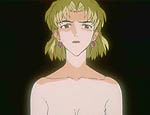
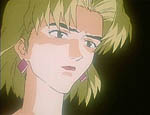
Ritsuko,
firm in manner
In the nude
|
|
|
|
260
|
Ritsuko
(backside) standing in front of monolith
Her manner is not like one whose body is covered
|
KEEL
"We would also like things to proceed smoothly. No more of this
disgrace and hurt will come upon you."
Ritsuko (backside) "I do not feel any disgrace."
Man A (OFF, right) "A strong-spirited
woman. I see why Ikari keeps you by his
side."
Man B (OFF, left) "However, the one who presented you to us was
none other than... (grumbling)
|
|
|
261
|
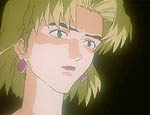
The same blank face, but she can no longer hide her unrest and finally
yields the slightest expression
|
(right)
"...Ikari-kun himself."
Ritsuko
"!..."
|
|
|
262
|
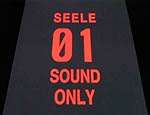
Monolith
No. 01
|
Keel
(OFF) "He refused the interrogation of EVA-00's pilot and sent you
as her proxy, Dr. Akagi."
|
|
|
263
|
Ritsuko
reacting to the present state of affairs with an entirely cold expression,
side profile close-up
|
Ritsuko
(MONO) "I'm Rei's substitute, am I?"
|
NOTES
C260: "Her manner is not like..."
sounds off... Here, it makes more sense if there is no negative! I have run
into another instance of wa nai in these scripts where the opposite makes
more sense, and, actually, sometimes I see ja nai (a contraction of de
wa nai, I believe) translated as if the opposite meaning was intended. Uhhhhhh.....
I'm confused.
"Wareware
mo onbin ni koto wa susumetai":
I haven't seen the mo after wareware
reflected in any other translations; it means "too" or "also",
though I'm not entirely sure why it's being used here. (Who besides "we"
-- the old crones -- wants "things to proceed smoothy"?)
"Kimi
ni kore ijou no ryoujoku, tsurai omoi wa saseta kunai no da":
Ryoujoku means "insult, disgrace,
rape" -- there may be quite a bit of validity in the last option, although
it is still a subjective matter, so I opted for the less specific "disgrace".
(On the other hand, the similar term Ritsuko responds with, kutsujoku,
means "disgrace" or "humiliation".) What I translated as
"hurt" (tsurai omoi) is literally "painful feeling",
of the emotional sort. ADV's revised subtitles for #23' opt for "degradation
and suffering" -- either way works, really.
I'm not completely sure about koboshi,
either. The only meaning I can find for it that seems to work at all is "grumbling",
but it is used in this scripts (to describe the manner of a given batch of dialogue)
a lot, and in most cases, "grumbling" really doesn't make much
sense. (For instance, some of Asuka's maniacal yelling in #25' is designated
with koboshi -- far as I know, it's kind of hard to grumble and shout
like a maniac at the same time.) On a side note, I find it odd how the other
SEELE members are referred to only as "man" and not by the country
they represent -- like, "French committee member" or something. "Man
B" is the French guy (he's rather ... distinct), and I think "A"
is the English one.
C261: Frenchy doesn't actually say "Ikari-kun
himself", but the translation seems to have more zing if you add
it on.
C263: I couldn't find a meaning for "samekiru",
but "hiekiru" (another verb compound written with the same two kanji)
means "become completely chilled". Hmm... The "REI" is an
obvious typo, which I've corrected in the translation. The translation here
is the same as ADV's original DVD subtitles -- I don't think the "I was
sent in place of Rei?" they use in #23' works quite as well. One really
can't translate this line all that satisfactorily, since its proper delivery
relies on gramatic flexibility that would sound rather stupid in English. In
a sense, she's thinking, "Rei's substitute ... (that's what) I (am)"
-- it's more a realization than a question to herself.
Scene: The Rei Tank (End Segment)
Phase One (Romaji)
|
Screen Cap
|
Cut No.
|
Description
|
Dialogue
|
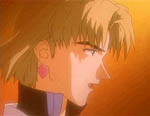
|
|
318
|
RITSUKO, samekitta
ketsui hanmen yukkuri PAN
|
RITSUKO "Dakara kowasu
no. Nikui kara"
|
|
|
319
|
SUICCHI osu to MONITÂ
aka ni naru
|
SE <<PI~>>
|
|
|
320
|
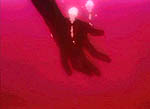
Suisou, kihou
ga agaru to douji ni akaku henshoku suru
Yukkuri to shizunde iku REI no te no SHIRUETTO
Shikashi karada ni wa tsunagatte inai
|
SE <<REI-tachi no waraigoe
(SUTEREO de nanjuunin mo)>>
|
|
|
321
|
Sono hiki. Karada
no SHIRUETTO ga kuzurete iku
|
|
|
|
322
|
MISATO chou UP. Kyougaku
|
MISATO "!"
|
|
|
323
|
Hayai AKUSHON de tsutsu
o kamaeru MISATO
|
MISATO "Anta! Nani
yatte 'n no ka wakatte 'n no!?"
|
|
|
324
|
RITSUKO juchou no emi
o ukabete
|
RITSUKO "......"
|
|
|
325
|
Yukkuri to shizunde
iku BARABARA no SHIRUETTO
|
RITSUKO (OFF) "Ee, wakatte
iru wa. Hakai yo. Hito ja nai mono. Hito no katachi
o shita mono na no yo"
RITSUKO (OFF) "Demo sonna mono ni sura watashi wa maketa!
Kate nakatta no yo~!"
RITSUKO (OFF) "Ano hito no koto o kangaeru dake de,
donna, donna ryoujoku ni datte taerareta wa"
RITSUKO (OFF) "Watashi no karada nante, dou demo ii
no yo!"
|
|
|
-
|
RASUTO chikaku ni egao
no REI no kubi ga IN suru
|
RITSUKO (OFF) "Demo,
demo ano hito wa, ano hito wa ...... wakatte ita noni"
|
|
|
326
|
Atama o tarete
GUCHIru RITSUKO
|
RITSUKO "BAKA na no yo.
Watashi wa"
|
|
|
327
|
Suisou no hikari
ni ukabu 3[san]nin no SHIRUETTO
|
RITSUKO (se) "Oyako
sorotte oo-BAKA mono da wa"
|
|
|
328
|
MISATO, ASUKA ni tsuzuite
3do nani mo ienai SHINJI
|
|
|
|
329
|
3[san]nin no
SHIRUETTO
|
RITSUKO (se) "Watashi
o koroshitai no nara soushite. Ie, soushite kureru to ureshii"
|
|
|
330
|
RITSUKO namete MISATO
|
MISATO "Sore koso BAKA
yo, anata wa"
|
|
|
331
|
Kata o furuwasete
nakihajimeru RITSUKO. Nakikuzureru
|
RITSUKO (se) "(naki)~~~~~~"
|
|
|
332
|
Miorosu MISATO
Kanashii, doujou, ketsui
|
MISATO "EVA no toritsukareta
hito no higeki"
|
|
|
333
|
Naki-kuzurete
iru RITSUKO no se MISATO no mita me
|
RITSUKO (se) "(naki)~~~~"
|
|
|
334
|
MISATO, tsurasou na
hyoujou
|
MISATO "Watashi
mo onaji ka"
|
Phase Two (English Translation)
|
Screen Cap
|
Cut No.
|
Description
|
Dialogue
|
|
|
318
|
Ritsuko, coldly decisive side profile, slow
pan
|
Ritsuko "That's why I'm
destroying them. Because I hate them."
|
|
|
319
|
When she presses the switch,
the monitor turns red
|
SE <<BEEP>>
|
|
|
320
|
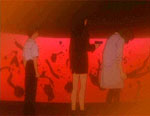
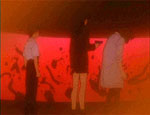
The tank, as bubbles rise the
color turns to red.
Slowly, a silhouette of Rei's hand sinks downward, but it
isn't connected to a body
|
SE <<Reis' laughter
(several tens in stereo, as well)>>
|
|
|
321
|
Pull out from that. Silhouettes
of bodies falling apart
|
|
|
|
322
|
Misato super-UP. Shock
|
Misato "!"
|
|
|
323
|
With swift action, Misato
points her gun
|
Misato "You! Do you have
any idea what you're doing!?"
|
|
|
324
|
Ritsuko, a smile of self derision
surfacing
|
Ritsuko "......"
|
|
|
325
|
Silhouettes of body chunks
slowly sinking
|
Ritsuko (OFF) "Yes, I know.
I'm destroying them. These aren't people. They're things that were shaped
like people."
Ritsuko (OFF) "But I lost, even to these things!
I couldn't win!"
Ritsuko (OFF) "I only needed to
think about him, and I could endure any kind of disgrace, any."
Ritsuko (OFF) "I didn't care what happened to my body!"
|
|
|
-
|
At the end of the cut, the
head of a smiling Rei comes IN close to the camera
|
Ritsuko (OFF) "But,
but he, he...... And I knew, too."
|
|
|
326
|
Ritsuko dropping her head
and grumbling
|
Ritsuko "I'm such a fool!"
|
|
|
327
|
The silhouettes of
three people, floating in the light of the tank
|
Ritsuko (backside) "Like
mother, like daughter, we're both big fools."
|
|
|
328
|
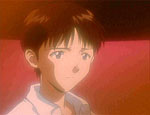
Following up his dealings
with Misato and Asuka, for the third time Shinji has nothing to say
|
|
|
|
329
|
The silhouettes of three people
|
Ritsuko (backside) "Kill
me if you want to. No, I'd be happy if you did."
|
|
|
330
|
Misato looking down at Ritsuko
|
Misato "You're only a
fool if you really think that."
|
|
|
331
|
Her shoulders shaking, Ritsuko
starts crying. She breaks down into tears
|
Ritsuko (backside) "(crying)~~~~~~"
|
|
|
332
|
Misato looking down
Sorrowful, sympathetic, decisive
|
Misato "The tragedy of
the people possessed by EVA"
|
|
|
333
|
Backside of a brokedown, crying Ritsuko as
seen from Misato's eyes
|
Ritsuko (backside) "(crying)~~~~"
|
|
|
334
|
Misato, her expression full
of pain
|
Misato "Am I one of them,
too?"
|
NOTES (lots of them!)
Regarding the screenshots, most of these
were taken from ADV's "Resurrection" DVD. Oddly, most (all?) of the
shots from this scene have a strange red gradient effect on the upper-left and
lower-right edges -- I can't remember if this is present in the original Japanese
release (I would guess it is), but I find it distracting as hell. You can probably
figure out which screenshots I took from my "Renewal" AVI of #23'...
C318: Technically, it's more like "Because
(they're) despicable", but we wouldn't want Ritsuko to sound like Daffy
Duck... ::P
C320: I'm guessing the Japanese say "several
tens" where we might say "several dozen" -- why we think in terms
of multiples of 12 is completely beyond me, though. ::p The whole thing about
"several tens in stereo, as well" kind of mystifies me (they already
established that there are multiple Reis laughing with Rei-tachi), but
oh well, it's not terribly important.
C322: Kyougaku can mean "surprise",
"fright" or "shock". Or possibly some strange combination
of the three. ::p
C323: Notice that Misato is using the "bossy"
form of anata here -- I thought Asuka had the monopoly on that! I'm not
sure what the deal is with 'n no -- for emphasis, I suppose.
C324: "Self derision", eh? Very
interesting...
C325: Quite a few notes for this cut...
"RASUTO chikaku ni egao no REI
no kubi ga IN suru" -- gawd, this description is a nightmare! Even
though RASUTO is obviously the English word "last", "last"
makes absolutely no sense here, the way that WE would use it. Please forgive
me for mutating RASUTO into "at the end of the cut". ::p Chikaku
means "nearby", but I don't know why an adverb would need ni
after it; and since "nearby" would sound rather stupid in the translation,
that means more translation mutation on my part. Interesting how they describe
the head as being a "smiling Rei", since in the final you can't see
her face at all. (Well, I suppose if I look really closely, I can see
the slightest hints of that inane open-mouthed grin.) Kubi usually
means "neck", but I still have no idea how/why it is sometimes used
as "head" rather than atama or toubu. With "IN
suru", "IN" (the English word, in Roman letters) is evidently
being used as "code" for something -- kind of like how "UP"
really means "(a) close-up", "OFF" means "off-camera",
etc. If I had to guess, "IN suru" (with suru making
"IN" a verb) refers to something entering -- coming into --
the frame.
Onto Ritsuko's lines, of which there are
many... I still don't understand this "<someone> no koto"
stuff. Why does Ritsuko say "ano hito no koto o kangaeru" and
not "ano hito o kangaeru"? Maybe it's a case where we would
say "about <someone>" -- i.e., to "think about
<so-and-so>" or to "say something about <so-and-so>".
I guess it makes sense, if I think about it that way. Also, ano hito
literally means "that person". I'm not sure why she's using it instead
of kare, "him", since it's pretty well-understood who she is
talking about -- ah, Japanese is ever a language of subtleties pathetic gaijin
like me just can't grasp. On a random note, Rei ALSO uses ano hito to
refer to Gendou (episode #25).
Hey, look, there's ryoujoku again!
The only meaning I could find for datte
is "but" or "because", though its placement in front of
the verb doesn't make much sense to me. How the heck do I incorporate "but"
or "because" into the meaning for that sentence? It's not reflected
in any of the translations I have handy, either, not even ADV's revised #23'
subtitles. Gwar.
The "any" at the end is meant
to reflect the repetition of donna -- none of the other translations
bothered to deal with it, so I thought I might as well.
"Watashi no karada nante, dou demo
ii no yo!" is a tough one -- you really can't translate this into English
literally, though if you know Japanese well enough, I'm sure it makes perfect
sense. ::p My instincts (whatever they're worth) tell me that ADV's latest translation
of the line ("I didn't care what happened to my body!") is spot-on.
(One could possibly go a little more literal and get "Whatever happened
to my body was fine with me!", but, eh, whatever.) In any case, it beats
the hell out of the original ("I don't care how wretched I become!"
-- how the heck did they get that?).
Onto the line "Demo, demo ano hito
wa, ano hito wa... Wakatte ita noni"... Including the reiteration of
demo in my translation sounds kind of stupid, but I had to do it! Interestingly,
the subtitles for ADV's "Director's Cut" releases are a vast
improvement over the original (though in a few rare cases I prefer the original
wording), especially evident here. Compare "But... but he chose... he chose...
I knew this, but..." to "But he... He... And I knew too." There's
just no contest! The thing is, Ritsuko was saying something ano hito
(Gendou) but kept the rest of the thought to herself. We're left to guess what
she actually meant, but in ADV's original subtitles, they tried to GUESS the
unspoken verb, which was, IMO, a big mistake. She doesn't assign a verb to ano
hito, so we're left guessing what ano hito actually did. (It's kind
of similar to translations of Gendou's infamous "unspoken line" from
EoE that assumed "I" was the subject of the sentence when we only
heard him say hontou ni, "in truth".) I'm rather glad they
corrected this, in any case. I'm using their wording of the wakatte ita noni,
since I like it, even though, literally, it would be more like "even though
I knew/understood".
C326: "Grumbling" sounds a little
odd, but it's the only meaning I could find for guchiru. On the actual
dialogue... In English, we really can't put the subject into its own afterthought-sentence
like Ritsuko does here. It's like saying "An idiot! I am." (Well,
"An idiot! That's what I am" might work, but it sounds kind of lame
coming out of Ritsuko here.) So whatcha gonna do? Make the translation one cohesive
sentence, of course. (Generally speaking, with my translation work, I like to
leave the sentence units alone as far as lumping and splitting goes. Sometimes
the occasion calls for it, though.)
C327: The idea of silhouettes "floating"
sounds a little strange to me (especially when their feet are firmly planted
on the ground ::p), but I can't really figure on a meaning for ukabu
that would make more sense. Oyako was an annoying one -- I couldn't find
the kanji compound defined in any of my sources, and I couldn't match any standard
kun yomi or on yomi to the kanji either -- Ritsuko was saying
something completely different. (I HATE it when kanji compounds do that!) After
listening to Ritsuko's line OVER and OVER again, I finally figured it out, and
thank gawd a Google search for oyako actually turned up results. Stupidly
enough, the kanji are "mother" and "daughter", but they're
pronounced like the kanji for "parent" and "child", and
together they mean "mother and child". Gawd, kanji messes with your
head sometimes.
C328: The wording of "MISATO, ASUKA
ni tsuzuite" is confusing (if you look at it literally, it could mean
"continuing by Misato, Asuka", which obviously makes no sense), but
I think the statement, as a whole, is referring to two previous incidents with
Misato and Asuka where Shinji had a chance to say something, but didn't, and
Ritsuko's breakdown is the third. The Misato one is obviously the end of #21,
when she learned of Kaji's death and we saw Shinji hide in his room and cover
his ears. The Asuka one is presumably when she was mourning Kaji at the
kitchen table, which we only know happened by virtue of one
image briefly flashed in "DEATH". Although we never see how Shinji
reacts to Asuka's situation, he evidently left Asuka to wallow in her grief
alone. Interestingly, the "DEATH" scene is reprised in "EoE",
via Instrumentality, and Shinji actually does try to talk to Asuka --
though we know how
well THAT turned out.
C329: I really have NO idea how Ritsuko
is using soushite here -- far as I knew, it was a conjunction, and here's
she's using it twice in the same sentence! Argh. On a side note, kureru
can mean "do a favor for", morbidly enough.
C330: I
got something slightly different here for Misato's line than the translations
I'm referencing. My translation is more of an improvisation that what's literally
there. Misato isn't actually saying "You're only foolish if...", but,
given that she seems to be displaying a large amount of sympathy for Ritsuko,
I think there's a good chance that she's using "BAKA" to discredit
Ritsuko's earlier self-accusation of "baka-dom". In other words, "Come
now, you're not a baka, but you would be if you really wanted
me to pop a cap in yo' @$$. Tell me it ain't true." In any case, whatever
Misato said, it didn't improve the situation any.
C332: Toritsukareru is an interesting
verb... It means "to be possessed" -- e.g., by an evil spirit or parasite
(at least, so an Urusei Yatsura page told me). I guess coming from Misato,
who's proclaimed her hatred of the Evas, this doesn't sound so weird. What does
sound odd is the idea that the Evas themselves are possessing anybody; I think
it's more reasonable to think that Misato is using the term in a more general
sense, as per ADV's original translation. It's a tragedy of the people involved
with the projects and organizations surrounding the Evas -- "possessed"
by Eva in THAT sense.
C334: Misato's sentence ends in ka
-- the true Japanese equivalent of the question mark (though it's true they
do like using question marks a lot these days) -- so I find it rather odd that
no one else has translated this line as a question to herself. Even ADV's Resurrection
subtitles screwed up on that mark.
RANDOM STUFF
• Original Japanese script provided by thekillingmantra
(available at his website for
those interested).
• English translations referenced from Collection 0:7 and Directors' Cut:
Resurrection (ADV Films) and the Literal
Translation Project.
• "Neon Genesis Evangelion" Copyright © GAINAX/Project Eva.
Page created by Reichu (Rachel K.
Clark) on March 18, 2004. Updated April 3, 2004. Script transliteration,
final translation, and screenshots by me. Feel free to link, but please don't
steal my work.
Kudos to Shin-seiki for requesting these scenes --
hopefully, my efforts have been useful in SOME way or another.
Feel free to contact if you'd like to see me give
other scenes from the anime a similar treatment to these ones. I'd love to eventually
process every script provided on the Renewal DVDs, but that will obviously
take a very long time.